On the Relationship Between the Various Arts
(2019-08-29)
Defining the relationship between the different arts in the contemporary era is crucial because it leads us back to an evaluation of the building as “total participation”—one that assumes direct meanings, no longer mediated by abstruse theories that, more often than not, remain obscure. The “modernist deception” that has developed over time—due to various historical, artistic, economic, and social reasons—has generated a certain confusion among ordinary people. Even academic circles do not seem exempt from this confusion (though some progress has been made today), where diverse theories hover through university halls and conference speeches. In fact, these ideas lack true concreteness; their discourse is not supported by a linear logic capable of directing their content into reality.
Speakers settle behind the podium and begin to talk of designing architectures bound by hazy definitions that have neither head nor tail. These are concepts that remain only in the minds of those who produce them and the poor onlookers who listen to muddled words, devoid of strong, concrete thought.
I have happened to listen to university lectures where it was stated with extreme nonchalance—almost to emphasize its obviousness—that the three Vitruvian elements, namely firmitas, utilitas, and venustas, are no longer sufficient in architecture. Instead, space and time must now be added to them. A thought occurs to me spontaneously: why such a statement? Why the desire to highlight something that was already present in reality? To be clearer: how can one be so superficial as to think that, in the past, architects built without considering space and time, or without evaluating the many other factors that seemingly do not belong to the Vitruvian triad? The reason behind this claim—common to many contemporary architects—will be better highlighted later; for now, let us limit ourselves to explaining as simply as possible why space and time were very much present in the architecture of the past. If we are to believe these daring academic theories, in the 1500s (for example) people were so primitive they could not grasp the limitations of the Vitruvian elements, thus designing and constructing buildings that “lacked” contemporary space and time.
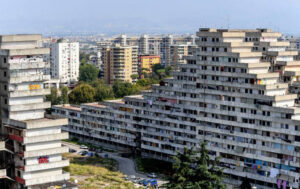
Yet, this “lack” led to results that history has left us and whose benefits we still enjoy today; time has not exhausted their value. They are perfectly integrated into their context, occupying the space of which we are a part: hence, time and space. These terms seemed to belong to the contemporary, but what has the contemporary created by basing itself on these “new” concepts instead? One need only look at a few examples in the photographs for a practical demonstration of this claim, if only to refresh the memory.
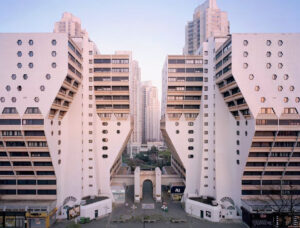
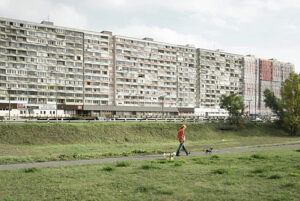

But let us take a step further to understand, through careful analysis, the nuances that different languages can suggest. Let us grant the idea that “time and space” in the current context refer to the poetic aspect of architecture: the achievement of an architectural language that expresses a new idea of space and time as a sublimation of matter—matter transformed into poetry, capable of reaching unexplored heights of pleasure. “This,” they will say, “is what we meant! This was what was missing from the Vitruvian triad of past architectures!”
Poetry as life, as pleasure, as the “all”—the poetic aspect is undoubtedly within architecture itself, drawing inspiration from a thousand things around us; no one can deny this. It is a poetry transformed into walls and bricks. But walls and bricks are not poetry. A brick is certainly not a poetic element; perhaps the building composed of those bricks will be, and the finished building itself can only be “poetry” within the daily reality of its role and its temporal existence. The building does not equal poetry.
I will try to explain myself better, as I consider this a fundamental and central point. It clarifies the confusion being generated between the various arts, leading to a jumble of muddled theories. What I wish to highlight is a tendency to translate poetic sensation into images devoid of mediation, making way or a concept or a way of reasoning that has consolidated over the years until it appears as an obvious and absolute truth. This mindset has influenced almost all fields of knowledge regarding art and literature. Fundamentally, this “absence of mediation” refers to the desire to extrapolate a concept and make it the sole essential element of the work, without considering the structures that uphold its meaning. It is a method frequently suggested in classrooms, where it is claimed that in a poem, the founding element is its meaning rather than the way it is written—rendering the act of memorizing it superfluous. I use this example to translate it into architecture.
To claim that the fundamental elements of architecture are tied to poetic and artistic events is to say that architecture develops according to the canons of our culture, where a project is a continuous intertwining of formal and functional elements. Form can highlight function, and vice versa. This represents the core of design and the point of reference for anyone in this profession. Up to this point, no one can dispute such a transition. However, regarding what was said earlier, in the relationship between function and aesthetics, there is a missing step—or perhaps one step too many. That is, the modernist belief that “form” is the essential element, where the resulting building represents the very symbol of our idea.
The idea becomes reality, initially represented as a sketch on a drawing sheet and then built to last. The mark that translates poetic abstraction via a simple pencil is, for most moderns, a “meta-mark”: an extremely schematic sketch indicating a primitive form, a guiding idea, a poetic spirit. That single stroke, defined so peremptorily by the architect, is meant to dazzle us, creating a play of reflections between the form, the observer, and the creator. More precisely, that primary aspect intended by the designer is (or should be) immediately perceived by the external observer. Under this condition, the design takes shape from that mental process translated into the “meta-mark.” The mediation provided by other elements (materials, colors, etc.) is supposed to disappear, and that mark is to represent the primary meaning—what the project wants to communicate.
This approach is typical of the current trend pervading other arts. A painting or a poem is analyzed by extrapolating its “message,” considering it the essential and indispensable element for defining the work’s quality. Thus, a poem assumes relevance because it provides a message, while the structure and composition—the formal aspect that translates the arrangement of words into music—are neglected or treated as secondary.
“No, my dear students,” they say, “there is no need to learn that poem by heart; understanding its meaning is much more important. Even if the artist wanted to convey that message through words placed in a precise order over days, months, or years, we will avoid talking about it because, being modern, we look at the substance rather than the ‘trappings’ in the way. Musicality? Order? Useless frivolities; it is the final message that counts.”
But we find that same “crucial” message in other artists as well; it is identical. It is curious that what we consider fundamental in one work is the same in others. Those poems, so different in their expression and formulation, nevertheless carry similar, if not identical, messages. If the message—the essence of the work—is the same for many, how can we say that that is what makes the difference? In architecture, how can a circle (representing the design “meta-mark”) be the essential footprint of the architect if, by its very composition, it is identical to others? I have drawn a square, but there are a thousand squares, just as there are a thousand circles and rectangles. Identical objects that are theoretically different. So, what expresses the difference if it is not found in the “meta-mark” theorized by the modernists?
If it is not in the general form, it must be found in the particularities of its construction. Just as in poetry (which students should memorize to better appreciate it), in architecture, it is the details that make the difference.
At this point, I assert that the “mark” is a negligible aspect—at least compared to the importance previously attributed to it—since different results can be obtained from the same mark. And what of the initial assumption? Those references to space and time expressed in the architect’s “meta-mark” now take on a completely different meaning, because it is the “detail” that assumes the role of guide. Today this seems strange, but it was not so in the past, when the knowledge of all elements composing an architectural structure was perfectly understood. It is fundamental, therefore, to resume the study of materials (rather than just their form), styles, colors, composition, proportions, and modules. We must dismantle the mental process described above that has generated only confusion—a confusion that ripples around us, as people are forced to endure buildings they often feel rejected by, deepening the rift between theory and practice, reality and dream. This explains why architecture is not poetry: the tools (the details) with which it is realized are not the same as those used for poetry. However, living within the harmony of its forms—that is poetic.
The modernist—whom I shall call by the neologism “modarnista” (the “trendy-modernist”)—instead tries to indicate the poetics of a building by shaping it like letters of the alphabet, searching for an “absence of mediation” that, more often than not, has produced damage that is difficult to repair.
© Arch. Alessandro Plini
www.archihouse.it
www.plini-leone.com
Contact for projects: studioarchihouse@gmail.com o plini.leone@gmail.com
Mob. +39 3496039795