(17-10-2020)
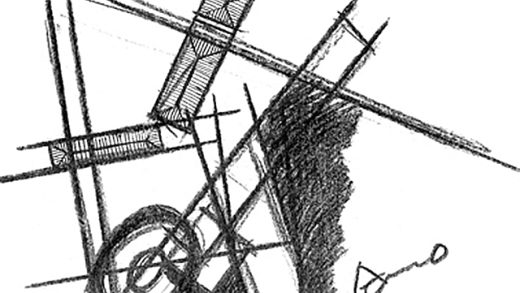
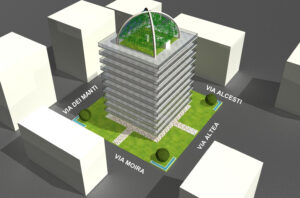
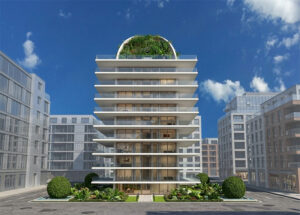
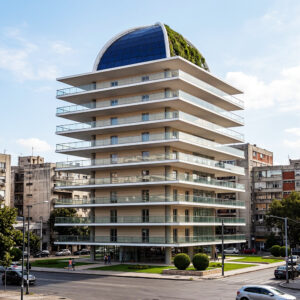
Design of a small apartment building (palazzina) in Rome, between Via dei Manti, Via Moira, Via Alcesti, and Via Altea.
“Modernity and tradition should be united not only on paper but also in practice—that is, in the ultimate act of building.”
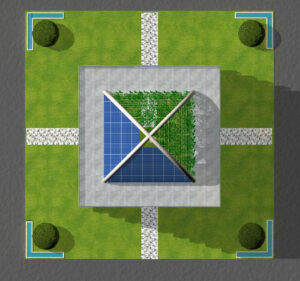
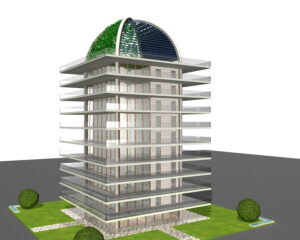
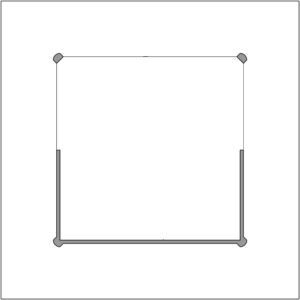
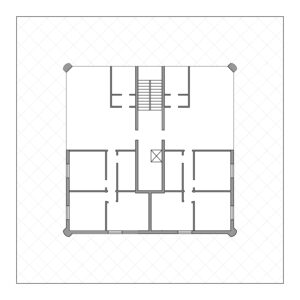
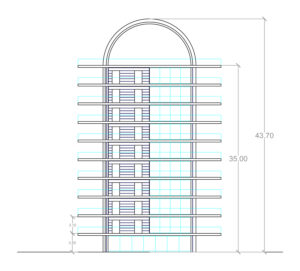
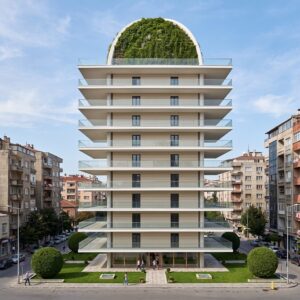
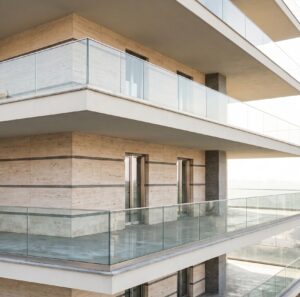
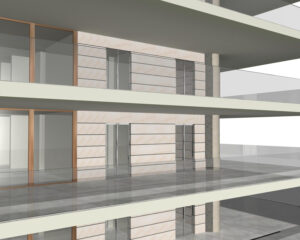
A residential tower block composed of two volumes of different materials: one solid, clad in stone, and one in glass. The living area is located in the glazed section, while the sleeping quarters are in the other. The materials used belong to the Roman tradition: travertine for the external walls, interspersed with peperino battens. At the four corners of the structure, massive pillars extend beyond the roof to form arches that support photovoltaic panels and climbing plants. A roof garden is also incorporated onto the terrace. The building is entirely surrounded by balconies. The window frames of the glazed section are clad in copper and are 20 cm wide, while those of the masonry section are metal with a polished steel finish. The ground floor, entirely glazed, is occupied by commercial activities: two shops and a café.
What meaning can we assign to this project, which—like the other projects presented so far—helps us highlight both general and specific aspects? This building departs somewhat from the characteristics of how I conceive of architecture—namely, that it should not exceed a certain height, in order to foster human interaction with the built environment (see also the related article). Nevertheless, it is interesting to observe how a structure that develops vertically can incorporate desirable elements. These elements have already been examined in other writings: for instance, openings, which should not merely be simple apertures calculated strictly for area and lighting compliance with regulations, but spaces where windows—both by occupying space and by defining it—become an essential, fundamental element. In this case, the opening is framed by travertine and peperino elements that run along the entire solid facade, and their French-door configuration aligns with the continuous wrap-around terrace, fully exploiting its potential. The steel-finish metal window frames stand in contrast to those of the transparent section, which are also metal but clad in a 20 cm-wide copper sheet—deliberately crafted so that this specific detail becomes a central focal point due to its scale and aesthetic presence, almost transforming into a distinct opaque element akin to a wall.
This highlights how crucial it is to delve deeper into detail when analyzing a simple opening. All of this integrates into the overarching concept formed by two elements—the opaque and the transparent—which must not serve as the sole design driver; otherwise, we would fall into the same trap as contemporary “modernist” architects, where the formal gesture claims to be the definitive element. The gesture, or meta-gesture, cannot be the fundamental element because, as I wrote in another article, that square is identical to a thousand other squares and, as such, will not be what makes the difference. Instead, it is necessary to re-engage with all the components that constitute the building, not merely the abstract void and solid of the initial concept. Among these are certainly the sourcing and tactile nature of the materials themselves; the four corner elements, delineated by massive pillars that form a sort of ribbing clad in travertine and peperino, rising to create intersecting arches over the roof that support photovoltaic panels (the technological element) and greenery (the natural element). The glass parapets themselves accentuate this contrast between opaque and transparent, while the horizontal balconies, with their pronounced depth, establish a dialogue between the horizontal and vertical planes that are further articulated in their detailing. Thus, the design does not halt at the initial diagram; it extends all the way to the resolution of the smallest elements.
© Arch. Alessandro Plini
www.archihouse.it
www.plini-leone.com
Design Enquiries: studioarchihouse@gmail.com o plini.leone@gmail.com
Mob. +39 3496039795