We have discussed the use of architecture, the use of the artifact that adapts and is adapted to the needs of life. This is because we want to base our reasoning on a concept that cannot be relativized: no one can deny or refute solutions that are fundamentally rooted in the very reason for architecture’s existence, unless we literally want to live on a canvas or within the written words of a poem.
Thus, architecture has a role with a very precise purpose that finds its final act in living, or rather, in good living, as previously stated. This draws a clear distinction between what is theory and what is the result in practice. What does this mean? Why explain this?
Because each of us might have a different judgment of a painting or a sculpture. One might argue that the slashing of a canvas is an absolutely original and innovative act, aesthetically sublime, but at the same time, other people might judge it as an unpleasant work, devoid of meaning and aesthetic taste, lacking details that could generate some “sensation” in us.
We could add the example of a modern sculpture or even a Happening where the artistic gesture is exhausted at the very moment it is produced.
Unlike these arts, architecture is subject to a particular “judgment” that goes beyond subjectivity—a judgment formed in the lived experience, in real life, in its utilization made up of time, space, and movement. We live in it day by day; we don’t just look at it, as one might look at any work exhibited in a museum. Instead, we look at it continually with different nuances of light, sound, and smell. Architecture is therefore different and distinct from all other artistic expressions.
Modern thought (for convenience, we will consider modern thought to primarily concern art from the 20th century to the present day), in its countless representations and dissertations on art, has transformed it over time, making it, in some respects, increasingly conceptual—less tied to technology and artisanal skills, and more dependent on its intrinsic meaning, understood as the expression of the artist’s poetics that generated it. Ultimately, the object loses its original meaning to acquire another.
Let’s look at some examples to better understand. Joseph Kosuth’s chair, Duchamp’s bicycle wheel, or the disorganised clothes placed on Pistoletto’s Venus no longer have their original use; they are no longer tied to the function for which they were created but acquire a new, conceptual one, stemming from the artist’s imagination. Here, the human act is merely mental; the quality of the artifact is exempt from particular manual interventions or processing that might have any artistic value or intention.
In this sphere of transformations, the various arts, such as painting, sculpture, literature, etc., tend to intertwine, connecting with each other, crossing boundaries and encroaching on one another, or at least that is the intention. Painting enters sculpture and vice versa, making it almost impossible to distinguish one from the other.
This is the elaboration of a “modern” approach to art, one that has consolidated over time, creating new trends that seek continuous originality. Such an approach has generated considerable confusion among the various arts, causing, in my opinion, a production of artifacts that aim to strike the imagination of the viewer, seeking to highlight a detail never seen before, as if these objects or ideas emerged from nothing. In reality, we know and understand from history that supposed originality is nothing more than the transformation of other works already realised or elements already present in nature. Indeed, this continuous search for originality, which pursues a detachment from everything done previously, only worsens the results, as it becomes the sole guiding element, which for a work of art seems quite reductive to me.
We should, therefore, be wary of those authors who seem to have created and invented who knows what new compositions, because in reality, they have invented nothing. What has resulted, as I said, is a great confusion that has dampened interest and alienated people who have rejected its premises. Contemporary art appears today, even more than before, as an elite art with snobbery as its main ingredient.
Architecture’s Distinctive Role
But let us return to architecture and highlight how it differs from the other arts, starting precisely from the examples provided by contemporary art, thanks to a logic that will demonstrate the inherent contradictions.
Architecture, by its nature, as mentioned, is designed and conceived in its aesthetic values with a very specific purpose: to be used as a place of living, functional to it. This, compared to the search for conceptual originality in art as described above, underlines the substantial difference.
But let’s look at a practical and surely amusing example: let’s refer to a scene from the well-known 1978 Italian film, Le vacanze intelligenti (starring Alberto Sordi and Anna Longhi), focusing on the moment they visit the Venice Biennale. Here, at a certain point, the wife, Augusta, tired, sits down on a chair that was part of a work’s installation.
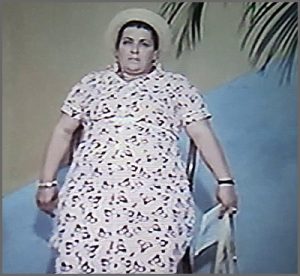
In my opinion, this provides extremely significant information, demonstrating how the image and the sense of the place detract from the original meaning. The aseptic room, which should crown a simple object as a work of art merely because it was defined by the artist’s mind, fades and disappears, clearly and directly reaffirming the use for which that object was produced.
It is the museum, therefore, that provides that chair with a meta-artistic value within which spectators, intent on discussing its value, try to find the most disparate and recondite meanings. Meanwhile, Augusta strips the chair of that “poetic” superstructure, because she enters that place without preconceptions. Unlike the other attendees, her reasoning is free from mediation, logically depriving the work of its presumed meaning. She involuntarily and genuinely applies, so to speak, the same concept as the artist, but shifts it to her side, seeing it for what it truly is: a simple chair!
It is something useful, something that has a precise utility, because the chair, moved from that place and placed in an apartment, would be decontextualised from the museum’s trappings, bringing out its real and unique status: that of a chair, an object used for a very specific function.
This is the meaning of what I said in a previous writing, where I stated that in architecture, the notion of utility comes before that of space (space understood as the designer’s poetics).
It is from here that I want to start to explain the difference between architecture and the other arts. In architecture, the primary purpose of an object is its use. In a common building, no one would mistake that simple chair for a work of art, that is, disconnected from its function. Someone, subjectively speaking, might still say it is a work of art regardless, of course, but always in strict relation to that function. That chair is a work of art because it is built in a certain way, because the designer and the artisan who conceived and created it committed themselves to making that chair beautiful and functional and not another. That chair could be anywhere, and yet it would always be a work of art. Such a chair has value regardless of its context, while the chair in the film could only acquire its artistic value (which, as we have shown, it doesn’t even have) in the museum context.
Therefore, when discussing the architectural work during its design, it is fundamental to first consolidate the concept of use referring to concrete living, made up of simple and often repeated actions.
Use comes before the poetic meaning of the work itself, which is then transfigured with a mark on a piece of paper. This makes us understand that the place of living comes before the mark, it comes before the intellectual impulse given by the volumetric interconnections that we will often find in our writings. How this then happens in practice, we will explain later.