(12-23-2023)
“It is thought that rises, not structures!”
“Alone, in this dwelling where the reddish evening light intertwines with the artificial glow, I begin to think, and my mind stills its worries; colors shift my manifold moods and the medley of days steeped in chaos and order; images clear and reality floods me with pleasant sensations; everything revolves around me, reaching all the way to the universe.”
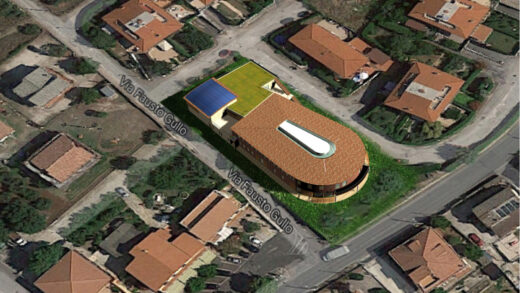
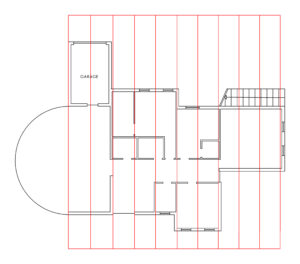
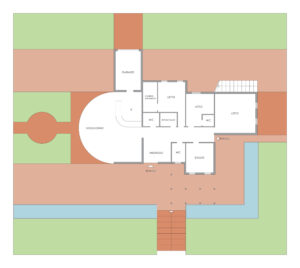
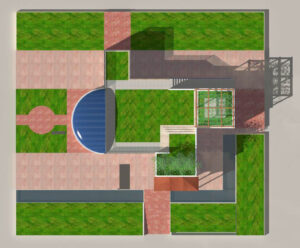
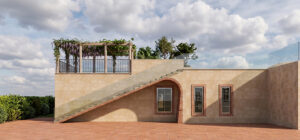
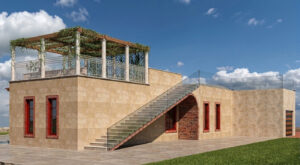
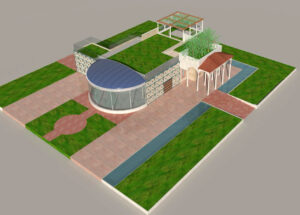
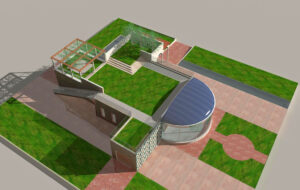
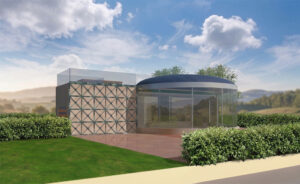
This villa I designed offers me the opportunity to direct my concept of architecture toward a different theme—one tailored to an individual client rather than a community. Here, the dialogue changes, and how the built environment is perceived opens up perspectives that alter the relationship between human and building. This distinction, initially functional, inevitably extends into the aesthetic realm. In practice, I cannot define a project using the same categories or references I rely on in other contexts.
Heights, indoor and outdoor spaces, proportions, materials, and technologies are all geared toward a single person, and this unique condition gives me the freedom to vary elements within the design far more than in apartment blocks or multi-family buildings.
I am not forced to direct people; here, it is the person who directs me. In a villa, the design process is solitary yet does not unfold in isolation; everything is fully legible, rational, and though less constrained, I still need to know where I am heading. Even when free to exercise my imagination through volumetric interplay, I remain bound to the details—here even more so, because rather than repeating along a continuous expanse as in larger buildings, they concentrate on that single façade, that single structure.
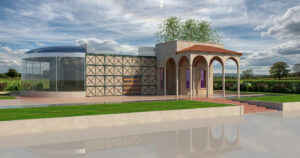
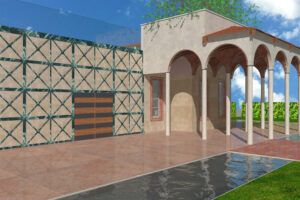
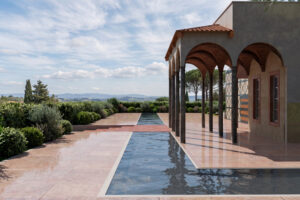
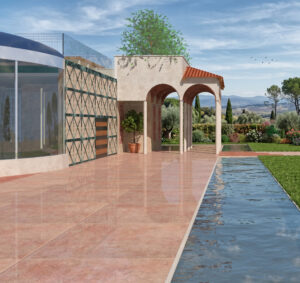
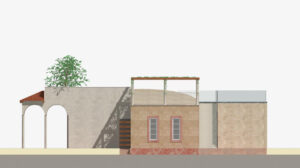
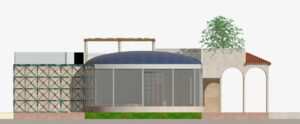
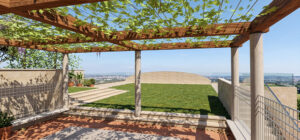
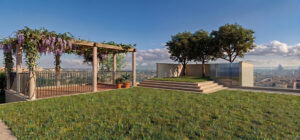
Similarly, in rendering the exterior columns supporting a small loggia, I deliberately articulated the distinct parts of the column, as that is how each element is perceived by us. To put it more clearly: while contemporary architecture often emphasizes the continuous line to define space—turning the column into a uniform element from base to crown without interruption—my intent embraces discontinuity to define that specific element rather than dissolving it into the building’s overall mass. And how achieve this if not by visually separating the column into its components—shaft, capital, arch—and further accentuating them through differing materials?
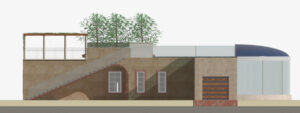
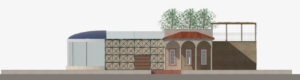
What do I mean by this? I mean that the final result does not hinge on the mere stroke of a continuous line, but on the tangible separation of every component that makes up the design. In this villa, therefore, we find a continuous dialogue between volumes and the elements that define them—where the latter take precedence over the former, heightening the complexity of the architectural design.
© Arch. Alessandro Plini
www.archihouse.it
www.plini-leone.com
Design Enquiries: studioarchihouse@gmail.com o plini.leone@gmail.com
Mob. +39 3496039795